


Smart Capital News

July 30, 2026
Smart Capital News
July 30, 2026
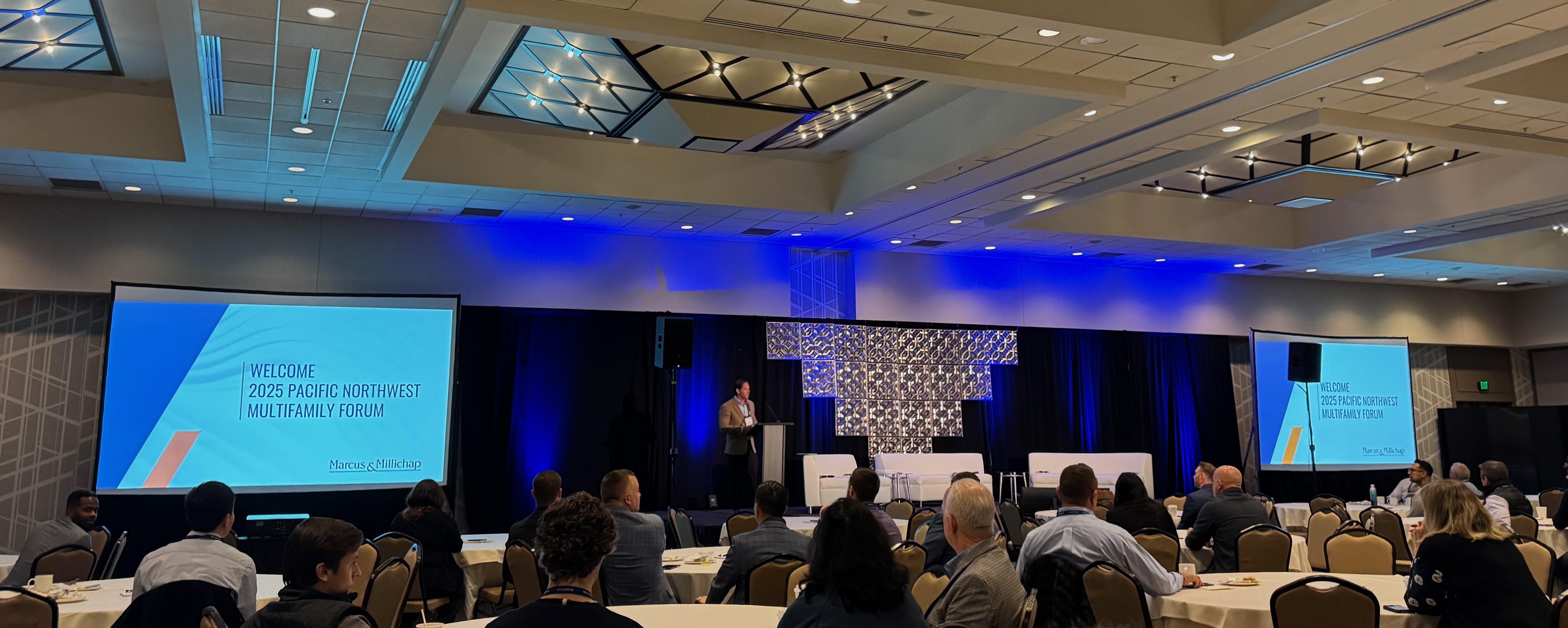
A potent mix of calculated caution and focused ambition filled the Sheraton Grand Seattle on October 16, 2025. Over 450 of the Pacific Northwest's most influential commercial real estate minds convened for the Marcus & Millichap / IPA Multifamily Forum, a high-stakes summit that brought together executives, investors, and developers to dissect market challenges, pinpoint opportunities, and forge the data-driven strategies needed to outperform in a new economic cycle.
The discussions cut to the core of the current CRE landscape: escalating operational costs, rent stagnation, capital market uncertainty, and the widening gap between firms that have operationalized real-time data and those still running on quarterly reporting cycles. One theme emerged repeatedly across panels: technology is no longer a competitive advantage in CRE — it's the price of admission to the next cycle.
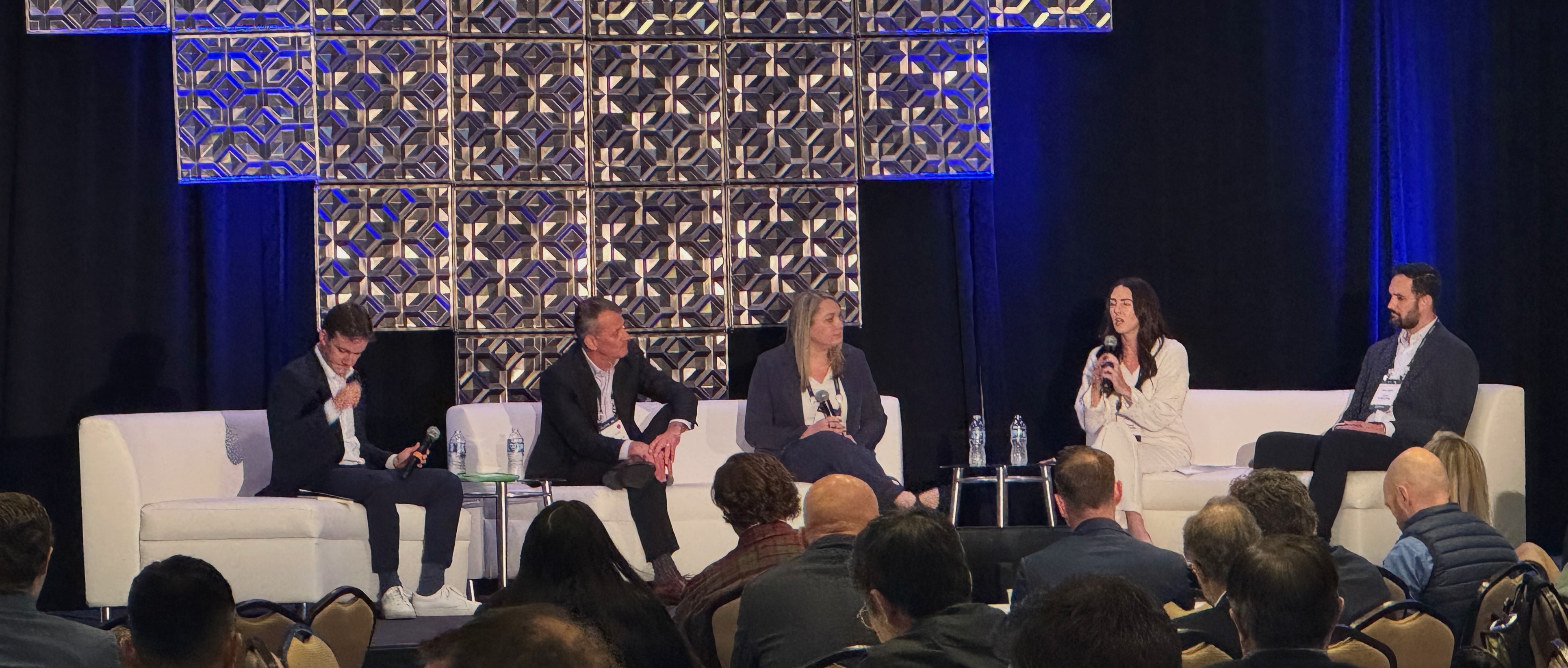
The commercial real estate industry is operating under a new set of rules. The old playbooks, once reliable guides to success, are no longer sufficient. Keynote speaker Clyde Holland, Chairman & CEO of Holland Partner Group, articulated this shift, emphasizing that navigating this new cycle requires a forward-thinking approach grounded in experience but supercharged by innovation. His message underscored a pivotal question that echoed through the day's panels:
How can we protect our assets and drive growth when traditional levers are losing their effectiveness?
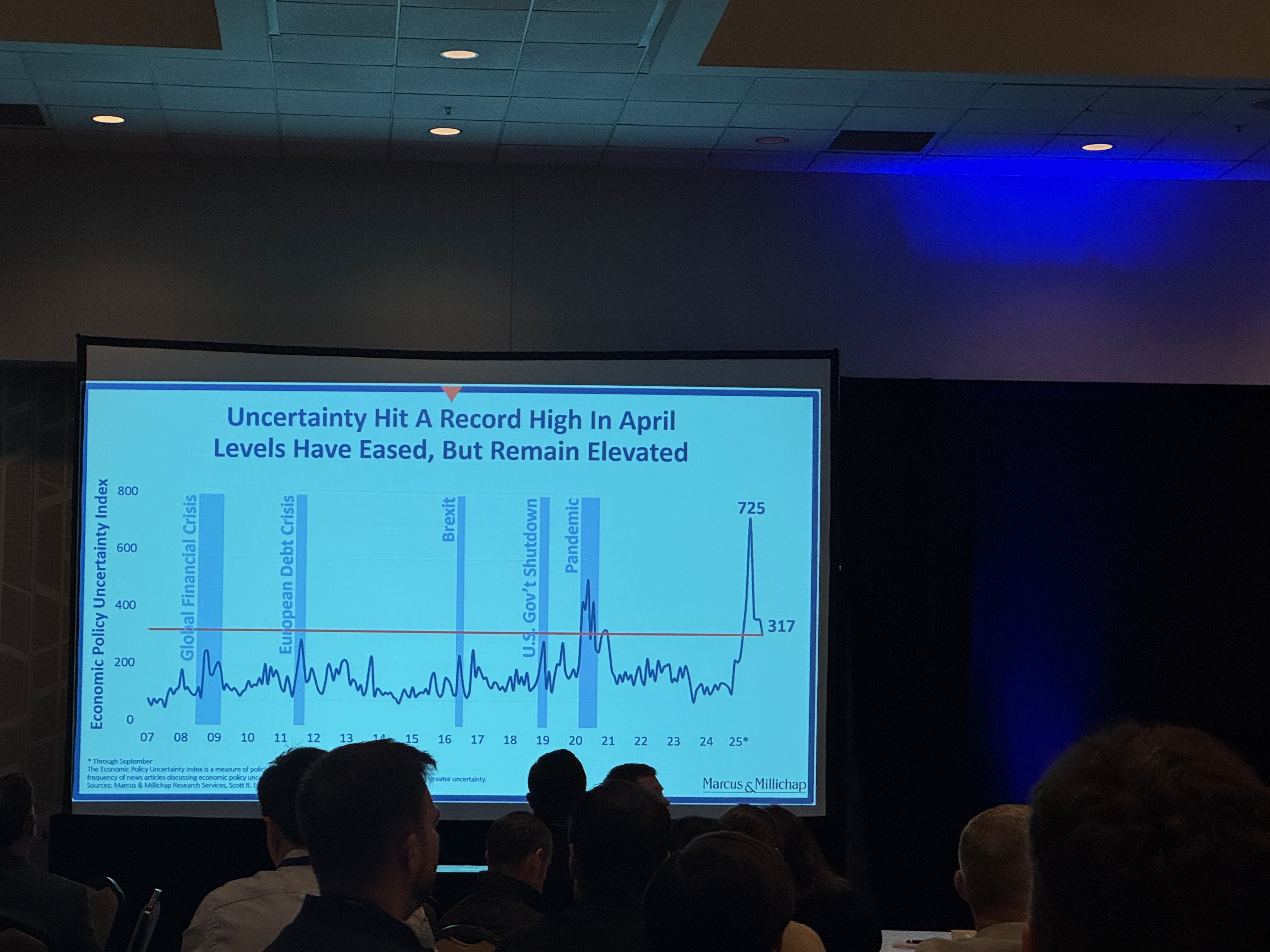
John Chang, SVP and National Director of Research Services at Marcus & Millichap, reinforced this with a data-rich Pacific Northwest Multifamily Market Outlook. He painted a picture of a market where success demands more than gut instinct; it requires real-time, granular intelligence. The problem, as many in the room knew, is that this intelligence is often locked away in fragmented data sources, buried in static spreadsheets and unsearchable PDF documents.
Chang's presentation underscored why the regional context matters. Recent Marcus & Millichap and CBRE research on the Seattle, Portland, and Boise multifamily markets shows three patterns relevant to forum discussions:
Rent growth has decelerated sharply across the region. CBRE's U.S. Multifamily Figures Q3 2024 and subsequent reports document the cooling of effective rent growth in West Coast markets after the 2021–2022 surge, with Seattle and Portland in particular giving back gains as new supply delivered through 2024.
Operating expense pressure has outpaced revenue. NAA's 2024 Survey of Operating Income & Expenses shows multifamily operating expenses growing materially faster than rental income across major metros — the structural margin compression panelists referenced repeatedly.
Capital availability has tightened. Mortgage Bankers Association data shows multifamily mortgage originations down meaningfully from 2022 peaks, with refinancing pressure mounting on 2020–2022 vintage loans as they approach maturity.
These dynamics framed every panel: this is a market where speed, precision, and portfolio visibility carry direct financial weight.
The structural friction came up in nearly every conversation. One asset manager — paraphrasing a sentiment shared by several attendees — described the problem as spending weeks compiling quarterly reports only to discover the market has already moved by the time the deck is ready.
Deloitte's 2026 Commercial Real Estate Outlook identifies this exact dynamic as the largest barrier to faster portfolio decisions across global CRE leaders. The cost is not theoretical: portfolio decisions made on stale data systematically underprice risk and miss opportunity windows. In a cycle where capital is scarce and operating margins are compressed, the firms still running monthly reporting cadences are competing against firms running daily.
One of the forum's most compelling themes was the state of the capital markets. The "Evolving Capital Strategies" panel explored the urgent need for CRE professionals to re-evaluate their approaches to sourcing debt and equity. The consensus was undeniable: a reactive stance is a losing one.
Panelists returned repeatedly to the survival value of underwriting speed. As one lender put it during the session: in this market, the ability to analyze deals faster and more accurately than competitors is no longer a margin advantage — it's the difference between closing and missing the deal entirely.
That observation lines up with industry research. JLL's Global Real Estate Technology Report documents the decision-speed gap between firms using integrated portfolio platforms and those still on manual workflows, with the integrated firms closing deals materially faster while reducing reporting errors.
For many firms, traditional underwriting remains the chokepoint. It is a manual, painstaking process that can stretch for weeks, involving the tedious transfer of data from operating statements and rent rolls into complex Excel models. This workflow is not only slow but dangerously prone to human error — the kind of transcription mistakes that quietly compound across a deal team and surface only when a covenant trips or a model gets stress-tested.
McKinsey's analysis of generative AI in real estate documents how AI-driven document processing and underwriting automation are reshaping the underwriting function specifically, with leading institutional lenders moving toward end-to-end automated extraction of rent rolls, T-12s, and operating statements.
The session titled "People, Processes, and Platforms: Driving Operational Success through Innovation" resonated deeply with asset managers in attendance. The pressure to do more with less has never been greater. Jason Murray, President of Thrive Communities, captured the core dilemma facing the industry:
"We're in this messy middle where it's hard to see a connection between adding these one-off solutions without creating further fragmentation, further complexities, where the teams can't wrap their head around to actually deliver better results and get costs down."— Jason Murray, President, Thrive Communities
For years, the industry has operated on a patchwork of disconnected systems. Property management software, accounting systems, and market data platforms all operate in their own worlds, forcing teams to manually stitch together a picture of portfolio performance. This is the definition of inefficiency — and Murray's "messy middle" diagnosis names something most operators feel but rarely articulate publicly.

The challenge of disjointed technology isn't just about inefficiency; it's about a lack of strategic vision. Panelists repeatedly described the difficulty of managing what one called a "cobbled-together tech stack" where platforms don't communicate, forcing teams into manual data reconciliation. This prevents leaders from getting a holistic view of operations, making it impossible to identify systemic risks or opportunities at the portfolio level.
The structural fix is integration, not addition. Deloitte's CRE Outlook shows the share of CRE leaders prioritizing data infrastructure consolidation over adding new point solutions has grown sharply year-over-year. The industry has learned that buying more tools without connecting them creates the exact fragmentation Murray described.
Imagine instantly knowing your portfolio's lease rollover schedule for the next 24 months, segmented by tenant risk profile. Picture receiving an automated alert the moment a property's net operating income (NOI) deviates from budget. This is the control and foresight Smart Capital Center delivers.
Our platform transforms asset management from a reactive, report-driven function into a proactive, insights-led discipline. Key capabilities include:
This sentiment was echoed by a Chief Risk Officer from a leading commercial mortgage lender, who noted, "Smart Capital allows us to transform our business. My team and I are more confident that our decisions are more objective and data-driven, which minimizes our risk."
In a market where obvious deals are scarce, the "Finding an Edge" session highlighted the need for more sophisticated CRE investment analysis. Leading investors agreed that unlocking value lies in connecting disparate data points to see the bigger picture. This means looking beyond the property itself to understand its place within the broader market context. Mark Bates, CIO at Security Properties, touched on current investor sentiment:
"...if you look at what's traded, very little of it's value-add... you're sitting here going like, why would I go invest in an older deal when I could literally go buy a new deal that I'm not doing, I'm taking no risk and getting to the same return."— Mark Bates, CIO, Security Properties
Bates was articulating the market's current preference for stabilized, newer assets where the path to returns is clearer and less dependent on risky renovation execution. The challenge for investors: in a market that broadly prefers stabilized product, the available alpha is in identifying mispriced value where others see only risk.
That requires a data layer most firms don't yet have. Sophisticated investors increasingly fuse internal portfolio data with external signals:
This fusion gives investors something basic financial modeling can't: contextual answers to the questions that actually drive returns. Is this property in Seattle's Capitol Hill neighborhood truly undervalued, or is its low price a reflection of underlying market weakness? Are the projected rent growths in this Portland suburb realistic, given local demographic trends? What's happening in the Boise submarket that isn't yet priced in?
Holland captured the strategic posture this enables:
"Using our research and our forward, what we call a forward five-year view, we can invest our partner's capital... and give the investor an opportunity to realize before the market shifts."— Clyde Holland, Chairman & CEO, Holland Partner Group
That forward view is what separates firms that act with conviction from firms that wait for consensus — and by the time consensus forms, the trade is gone.
The forum's themes — fragmented data, slow underwriting, disconnected systems, the need for forward-looking intelligence — map directly to the capabilities AI-powered CRE platforms now deliver. Smart Capital Center was built to address exactly the operational frictions panelists described:
Document-to-intelligence automation. Smart Capital Center ingests financial documents in any format — PDFs, scanned images, Excel files — and uses AI to extract, standardize, and analyze the data in minutes rather than days. Processing time for financial statements drops from 30–40 minutes per document to 1–3 minutes (a 30x productivity gain proven with JLL's asset management team). KeyBank reported a 40% reduction in financial model preparation time mid-implementation.
Integration over fragmentation. Direct API connections to Yardi, Argus, SS&C Precision, Midland Enterprise, and PNC Enterprise mean data flows automatically from existing systems into a unified portfolio layer — addressing Jason Murray's "messy middle" structurally rather than adding to it.
Scenario analysis at portfolio scale. Questions like "how does a 50-basis-point rate hike change DSCR across the portfolio" or "what's our total exposure to this tenant across properties" run in seconds rather than the hours or days they take in spreadsheet-based workflows.
Real-time benchmarking. Portfolio performance is continuously compared against market data drawn from 120M+ properties, surfacing which assets outperform, which need attention, and where market conditions are shifting.
The point isn't that any single platform solves every challenge raised at the forum. The point is that the structural shift toward integrated, AI-driven CRE infrastructure is no longer optional for firms operating at scale — and the firms operationalizing it now will be the ones still standing when the next cycle resolves.
The Marcus & Millichap / IPA Multifamily Forum made one thing clear: the future of commercial real estate belongs to firms that can convert data into decisions faster than their competitors. The challenges of the current cycle are significant — but the firms applying disciplined process, integrated infrastructure, and AI-powered intelligence are already pulling ahead.
Smart Capital Center was built by veteran CRE professionals who have closed billions in deals and lived the operational pain points panelists described. Trusted by institutional leaders including JLL, KeyBank, The RMR Group, and Tremont Realty Capital — and recognized with the GlobeSt Influencer in CRE Technology Award — the platform delivers the infrastructure forum attendees consistently identified as missing from their current operations.
The insights and connections forged at the Pacific Northwest Multifamily Forum will shape the regional market in the months ahead. For the leaders who attended, the path forward is clear: it is defined by innovation, powered by data, and secured by intelligent, proactive decision-making.
The Marcus & Millichap / IPA Multifamily Forum is an institutional CRE industry event series hosted by Marcus & Millichap's IPA division, bringing together multifamily investors, developers, lenders, and operators for market outlook sessions, panel discussions, and networking. The Pacific Northwest edition convenes the Seattle, Portland, and Boise multifamily community annually.
Four themes dominated the day: the structural cost of fragmented portfolio data, the survival value of fast and precise underwriting in a tight capital environment, the failure of disconnected technology stacks ("the messy middle"), and the shift in investor strategy toward stabilized assets over value-add plays in the current cycle.
How is hybrid work affecting multifamily real estate in the Pacific Northwest?
While hybrid work primarily affects office demand, multifamily in the Pacific Northwest has seen secondary effects: changing tenant preferences for in-unit workspace, shifting submarket demand patterns as workers relocate away from downtown cores, and pressure on amenity strategy as work-from-home becomes a permanent design consideration. CBRE's multifamily research tracks these patterns at the metro level.
How is AI changing CRE underwriting?
AI changes underwriting in three specific ways: extraction (turning PDF rent rolls and scanned T-12s into structured data in minutes rather than hours), validation (flagging inconsistencies across documents that manual review misses), and scenario analysis (running DSCR, LTV, and tenant exposure tests across portfolios in seconds). McKinsey's research on AI in real estate covers the operational implications in depth.
Why is data fragmentation considered the largest barrier to CRE portfolio decisions?
Fragmented data — split across property management software, accounting systems, lease administration, and market data providers — forces manual reconciliation that delays portfolio visibility by weeks. Deloitte's 2026 Commercial Real Estate Outlook identifies this as the single largest operational barrier cited by global CRE leaders, because portfolio decisions made on stale data systematically underprice risk and miss opportunity windows.
What is a "forward five-year view" in CRE investment strategy?
The "forward five-year view" — a phrase used by Clyde Holland during the forum — refers to building investment positions based on projected market conditions five years out rather than current spot conditions. It requires research infrastructure capable of identifying inflection points before they appear in transaction comps, allowing capital to be deployed before consensus forms and pricing adjusts.