


AI in Commercial Real Estate

July 30, 2026
AI in Commercial Real Estate
July 30, 2026
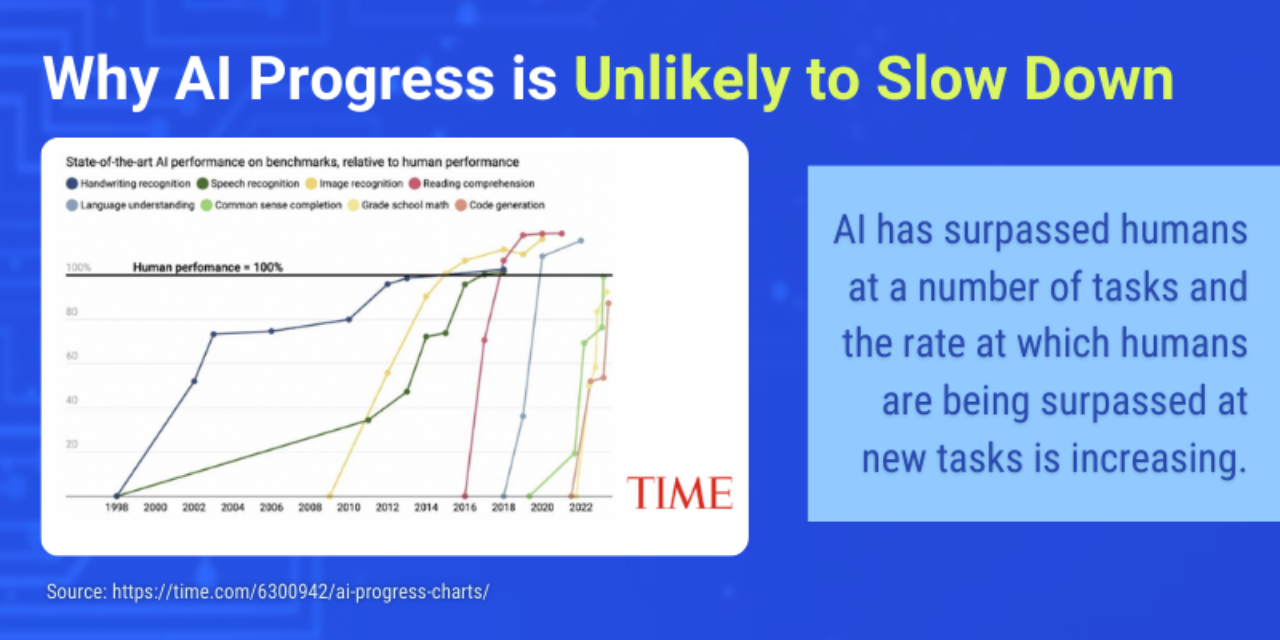
According to JLL’s 2025 Global Real Estate Technology Survey, 68% of institutional CRE investors have now deployed generative AI in at least one core workflow —up from 14% two years earlier, and the fastest adoption curve for any technology category in the survey’s history. The shift has moved in 18 months from hypothetical to operational: AI is no longer being evaluated, it is being scaled. And the investment teams scaling it fastest are the ones closing more deals per analyst, producing sharper investment committee memos, and compressing reporting cycles to institutional LPs without expanding headcount.
The meaningful question for institutional CRE is no longer whether to use generative AI — itis which workflows, which models, which governance, and which integration architecture deliver defensible results. Smart Capital Center — theAI-powered CRE platform used by KeyBank, JLL, and The RMR Group, and briefed to technical teams from Equity Residential, LaSalle Investment Management, CBRE Investment Management, and CIBC at RETCON 2024 — is the reference point for this analysis.
Generative AI in CRE investment and asset management refers to the application of large language models (LLMs), retrieval-augmented generation (RAG) pipelines, and autonomous AI agents to automate data-heavy work across the CRE lifecycle —deal screening, underwriting, due diligence, asset management, LP reporting, and debt management. Unlike earlier machine-learning applications that required narrow task-specific models, modern foundational models (the Claude, GPT, and Gemini families) can read unstructured documents, extract structured data, reason across multiple inputs, and produce human-readable outputs — all within a single unified workflow.
The technical architecture behind institutional-grade deployments rests on three components:
1. Foundational models — pre-trained LLMs that provide the reasoning and language layer.
2. Retrieval-Augmented Generation (RAG) — a retrieval layer that injects current, authoritative data (market comps, rent rolls, covenant language, offering memoranda) into the model’s context window, overcoming the context-length limits of the base model alone.
3. AI agents — orchestrated workflows in which multiple model calls act sequentially to complete multi-step tasks (e.g., an underwriting agent that pulls market data, models DSCR under three scenarios, and drafts an IC memo, all without a human in the intermediate steps).
Worked example. An institutional investor evaluating a $180M multifamily acquisition historically assigned two analysts roughly 40 hours to complete the underwriting memo: reading the offering memorandum, extracting rent roll data, pulling comparable sales and market rent benchmarks, modeling DSCR under base / downside / severe scenarios, and drafting the IC-ready output. With a generative AI agent operating over an RAG-enabled CRE data layer, that same workflow is now executed in under 6 hours of analyst time — with the analyst reviewing model outputs rather than producing them. The marginal cost per deal analyzed drops substantially; the number of deals an investment team can credibly underwrite per quarter goes up.
The distinction that matters for institutional teams: generative AI does not replace the investment decision. It removes the mechanical work — reading, summarizing, extracting, modeling, drafting — so the investment committee’s judgment is applied to higher-value questions.
Every source points the same direction: adoption is no longer the differentiator —deployment depth is. The institutional teams outperforming on productivity metrics are the ones who have moved past single-task pilots into agentic, end-to-end workflows.
Five drivers explain why institutional CRE investors have moved from cautious evaluation to operational deployment in under two years. Each operates independently —together they make the adoption curve harder to reverse.
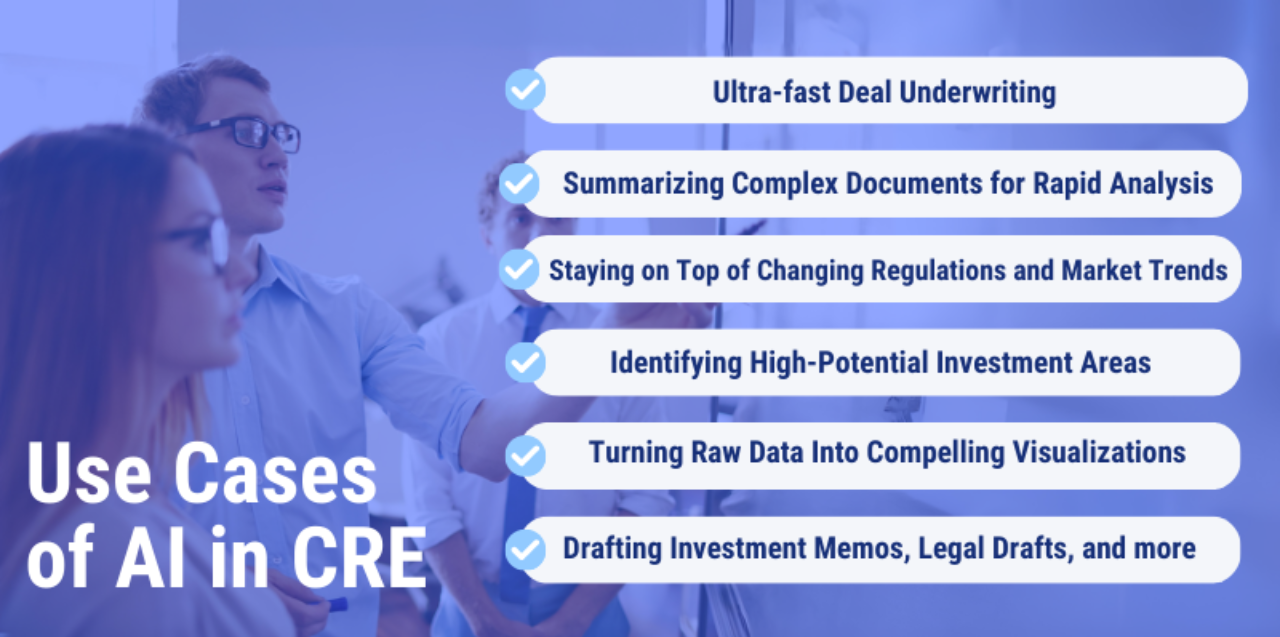
Deal underwriting has historically been the largest consumer of analyst time in an institutional CRE shop. Reading an offering memorandum, extracting rent roll data, pulling comparable transactions, stress-testing NOI, and producing a defensible IC memo can consume 30–50 analyst-hours per deal. Generative AI compresses every step of that workflow: document ingestion and summarization, automated data extraction into the investment model, real-time comparable retrieval from a data layer, and first-draft IC memo generation. For teams using Smart Capital Center’s AI-powered underwriting, that compression translates directly into more deals screened per analyst per quarter — the single most mathematically significant metric in an institutional portfolio’s deal flow.
AI agents are the operational layer above single-model calls: they execute multi-step tasks autonomously, with defined objectives and defined stopping conditions. In CRE asset management, agents are now being deployed as underwriters (screening inbound deal flow against the fund’s investment criteria), as debt managers (monitoring covenant compliance in real time across the portfolio), and as portfolio analysts (generating LP-ready performance summaries from the system of record without human assembly). A team that previously required ten analysts to cover a 200-asset portfolio can operate the same coverage depth with six —with the remaining analyst capacity redirected to higher-judgment work.
The base limitation of any foundational LLM is the context window: a model can only reason over the information directly placed in front of it. For CRE workflows —where a single deal evaluation may require reading a 200-page offering memorandum plus a 48-tab rent roll plus three years of historical financials plus 20 market comparables — context-window limits are the hard ceiling on whatAI can do. RAG solves this by dynamically retrieving only the most relevant information for each model call, injecting it into the context, and discarding the rest. The practical result is that an AI system can effectively reason over a data corpus many orders of magnitude larger than its nominal context window —which is how generative AI moves from toy demo to institutional infrastructure.
Investment committee memos are the single highest-visibility deliverable produced by an acquisitions team. They must be rigorous, defensible, and formatted to the committee’s specification — and they have historically consumed 8–12 analyst-hours per deal. Generative AI produces the first draft in minutes: pulling underwriting data from the model, market context from the RAG data layer, and committee-specific formatting from the firm’s template library. The analyst’s role shifts from drafting to reviewing, tightening, and stress-testing — which is where analyst time actually adds IC value.
LPs increasingly demand real-time, visually rigorous reporting — portfolio NOI trends, vacancy migration, CapEx status, covenant compliance. Manual production of these visualizations is where reporting lag originates. Generative AI produces publication-quality charts and summary tables directly from the underlying data the moment it updates, compressing the reporting cycle from days to minutes. For teams managing multi-billion-dollar portfolios, this is not a cosmetic improvement — it is a material change in how quickly the fund can respond to portfolio-level signals.
Institutional CRE teams evaluating generative AI must address four specific risk categories before production deployment. Each is grounded in current market and regulatory conditions.
Generative AI models can produce fluent, plausible-sounding outputs that are factually wrong— hallucinations — and the risk is highest precisely where the stakes are highest: cited comparable transactions, covenant language extraction, regulatory references. Platforms built on RAG over a verified, authoritative CRE data layer substantially reduce hallucination risk by grounding every model call in retrievable source data. Institutional investors should reject any Gen AI deployment that cannot trace every quantitative claim in an underwriting output back to a verifiable source record.
Every Gen AI deployment creates a data-governance question: where does proprietary rent roll data, LP-confidential portfolio information, and investment-committee correspondence live when it enters the model’s context window? Foundational model providers differ materially on data handling — some retain, some do not, some allow enterprise-tier zero-retention configurations. Institutional investors deploying Gen AI without explicit, contractual data-handling controls are creating an information-leakage vector that can compromise a deal pipeline or a competitive position.
An AI platform that does not integrate with the investment team’s existing system of record creates parallel data universes — and parallel data universes are where reconciliation errors live. Any serious Gen AI deployment must integrate directly with the institutional stack: ARGUS for cash-flow modeling, Yardi or MRI for property accounting, CoStar or CompStak for market comparables, VTS for leasing. Without those integrations, the AI layer is a productivity demo, not production infrastructure.

Institutional investors operating fiduciary portfolios are obligated to produce defensible, auditable documentation of every investment decision — including the data inputs, the model used, and the analyst’s review. A Gen AI workflow that produces outputs without preserving the full audit trail of retrieval, reasoning, and human review cannot meet LP reporting or regulatory standards. Platforms must demonstrate, not assert, audit-trail integrity before they enter production.
The following framework is the one Smart Capital Center has seen institutional CRE teams apply across evaluations, including the technical briefings delivered to Equity Residential, LaSalle IM, CBRE IM, and CIBC at RETCON 2024. Each step maps to areal deployment decision, not an abstract feature comparison.
1. Step 1 — Define the target workflows before evaluating platforms. Name the three to five workflows where Gen AI deployment will produce measurable ROI: underwriting, IC memo drafting, covenant monitoring, LP reporting, or portfolio analytics. Evaluating platforms without named workflows produces feature-by-feature comparisons that never terminate.
2. Step 2 — Pressure-test the RAG data layer with your own documents. Upload a real offering memorandum, a real rent roll, and three historical financials. Ask the platform to extract specific data points, produce a first-draft underwriting summary, and identify anomalies. If the output requires substantial manual correction, the RAG layer is not production-grade.
3. Step 3 — Verify foundational model flexibility. Leading CRE teams are not locking into a single foundational model — they are using the best model for each task (one family for long-context reasoning, another for structured-data extraction, another for drafting). Platforms that wrap a single model without architectural optionality will age poorly.
4. Step 4 — Inspect the audit trail architecture. For every AI-generated output, verify that the platform preserves the full retrieval chain, the model version, the prompt, and the human review step. Institutional deployment without this layer cannot meet LP reporting obligations.
5. Step 5 — Confirm direct integration with the existing stack. ARGUS, Yardi, MRI, CoStar, CompStak, VTS — the platform must connect to the institutional systems of record via API, not CSV exports.CSV integration is a red flag for long-term scalability.
6. Step 6 — Evaluate the AI agent framework. Single-taskAI is yesterday’s deployment; multi-step agentic workflows are where 2026’s productivity gains live. Confirm the platform supports agent orchestration, defined stopping conditions, and human-in-the-loop checkpoints at each stage.
7. Step 7 — Test data governance contractually, not verbally. Require written, contractual guarantees on data retention, model-training exclusion of your data, and regional data residency where applicable. Verbal assurances do not survive an audit.
8. Step 8 — Validate end-to-end ROI against a named deal. Run the platform through a complete investment committee workflow on a real deal. Measure analyst-hours before and after. Anything less than a 40% reduction on memo-heavy workflows is below the current institutional benchmark.
Smart Capital Center executes all eight of these steps in a single unified platform —architected on a RAG layer over $500B+ in analyzed CRE transactions, integrated with the institutional stack, and deployed in production at firms including KeyBank, JLL, and The RMR Group.
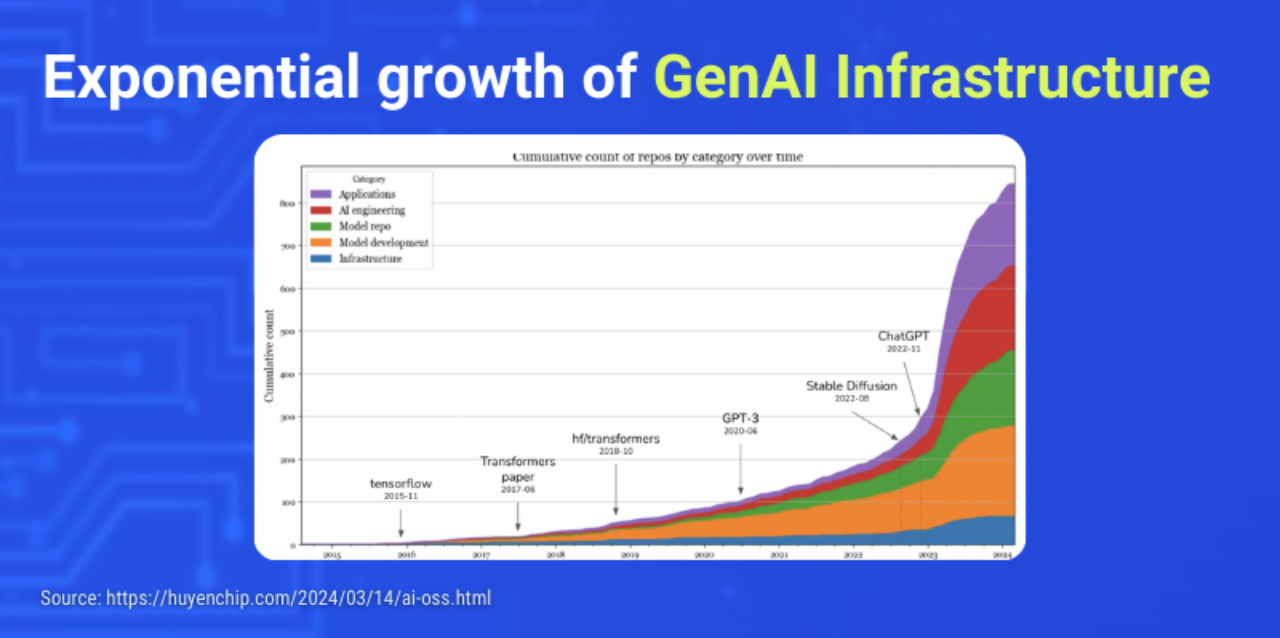
Generative AI in CRE investment and asset management has crossed the threshold from evaluation to operational infrastructure. The institutional teams outperforming on deal velocity, memo quality, and LP reporting are the ones who stopped treating AI as an experiment and started treating it as the architecture their analysts operate on top of. Everything about the current adoption curve —deployment depth, analyst-hour compression, audit-trail sophistication — points to a market where standing still is the decision with the most risk attached.
The practical question for an institutional CRE team in 2026 is narrow and concrete: which workflows, which models, which governance, which integration architecture. Answering it correctly is the difference between a Gen AI deployment that materially changes portfolio economics and one that produces PowerPoint optimism without operational change.
If your investment team is working through the same evaluation Equity Residential, LaSalle IM, CBRE IM, and CIBC engaged with at RETCON 2024 — but now with two additional years of production deployment data behind it — the Smart Capital Center team can walk you through the full architecture using your own portfolio and workflows as the reference point.

What is generative AI in CRE investment and asset management?
Generative AI in CRE refers to the use of large language models, retrieval-augmented generation, and AI agents to automate data-heavywork across the investment lifecycle — deal screening, underwriting, IC memo drafting, covenant monitoring, LP reporting, and portfolio analytics. Unlike earlier narrow-task machine learning, modern foundational models can read unstructured documents, extract structured data, reason across multiple inputs, and produce human-readable outputs within a single unified workflow.
What is retrieval-augmented generation (RAG), and why does it matter for CRE?
RAG is an architecture that dynamically retrieves relevant source data — rent rolls, market comps, covenant language, historical financials — and injects it into a language model’s context window at the moment of each query. It matters for CRE because a typical institutional workflow requires reasoning over far more data than any model’s native context window can hold, and RAG is what makes production-grade Gen AI in CRE possible.
What are AI agents in commercial real estate?
AI agents in CRE are autonomous, multi-step workflows in which a language model is orchestrated to complete a defined objective — such as screening inbound deals, monitoring covenant compliance across a portfolio, or drafting an IC memo — without requiring human intervention between steps.They represent the operational layer above single-task AI calls and are where most of the productivity gains in 2026 institutional deployments are being produced.
How does generative AI reduce CRE underwriting time?
Generative AI reduces CRE underwriting time by automating the document-reading, data-extraction, comparable-retrieval, and memo-drafting steps that historically consumed 30–50 analyst-hours per deal. Early adopter institutional teams report 55–70% analyst-hour reductions on IC memo production, redirecting analyst capacity from drafting to judgment, stress-testing, and review.
What are the biggest risks in deploying generative AI for institutional CRE?
The four largest risks are model hallucination in quantitative outputs, data governance around proprietary portfolio information, integration failure with the existing institutional stack (ARGUS, Yardi, CoStar, VTS), and audit-trail gaps that cannot support LP reporting obligations. Each risk has a specific mitigation and should be addressed contractually and architecturally before production deployment.
How doesSmart Capital Center support institutional CRE teams deploying generative AI?
Smart Capital Center provides an AI-powered end-to-endCRE platform built on an RAG architecture over $500B+ in analyzed transactions, integrated with the institutional stack (ARGUS, Yardi, MRI, CoStar, VTS viaAPI), and deployed in production at firms including KeyBank, JLL, and The RMRGroup. The platform executes the full investment lifecycle — screening, underwriting, IC memo drafting, covenant monitoring, and LP reporting — within a single audit-ready workflow.
See the same generative AI architecture institutional teams including KeyBank, JLL, and The RMR Group have deployed in production. Book a demo with the Smart Capital Center team today to walk through the full CRE investment and asset management lifecycle using your own portfolio as the reference point.