


CRE Investors

September 14, 2026
CRE Investors
September 14, 2026

IMN's Real Estate Private Funds Summer 2026 came down to a handful of clear takeaways for investors. Capital is available, but equity buyers are cautious and selective. Today's market moves faster than the old rules predict. Distress is driven by obsolescence rather than too much debt, and it is opening real repositioning opportunities. And artificial intelligence is moving from pilots into real underwriting work. Panelists returned to one idea again and again. This market rewards speed and good data, and the investors who can analyze faster are pulling ahead.
The event ran June 24 to 26, 2026 at the Newport Harbor Island Resort in Newport, Rhode Island. It brought together more than 550 executives, over 400 real estate private equity funds, LPs, and investors, and more than 130 speakers, with firms such as Brookfield, Ares, StepStone, Heitman, and CenterSquare Investment Management in the room.
Smart Capital Center was there, and this recap pulls together what was actually discussed across the panels and roundtables. We read the conference through the data behind our platform, which spans more than 1 billion real-time data points, over 120 million properties, and more than 500 billion dollars in analyzed CRE transactions, so this summary focuses on what these shifts mean for underwriting and acquisition decisions.

IMN's Real Estate Private Funds Summer Forum is an annual gathering focused on the real estate private funds market. It centers on fund formation, fundraising, emerging asset classes, and market strategy for private equity funds, LPs, and investors. The 2026 summer edition was held in Newport, Rhode Island, and the agenda covered equity and debt strategy, distress, data centers, and the role of AI across the investment lifecycle.
The clearest theme of the event was the gap between debt and equity markets, and what it means for investors. One debt fund manager described the split plainly. In his words, there has never been as big a disconnect between debt and equity as there is right now. Debt capital is available across a wide range of needs, which makes financing an acquisition easier than it has been in years.
Equity told a different story. Buyers are selective and slow to commit, and the core acquisition market has not fully returned. A real estate economist on the same panel tied the caution back to returns. Debt fund returns are running well above equity fund returns, so institutional money keeps favoring debt for now. For you as a buyer, that means less competition on many deals, but a higher bar to show why a given acquisition will outperform.
"It's probably amongst the best times to be a borrower right now in terms of just the plain availability of capital."
Debt fund manager, IMN Real Estate Private Funds Summer 2026
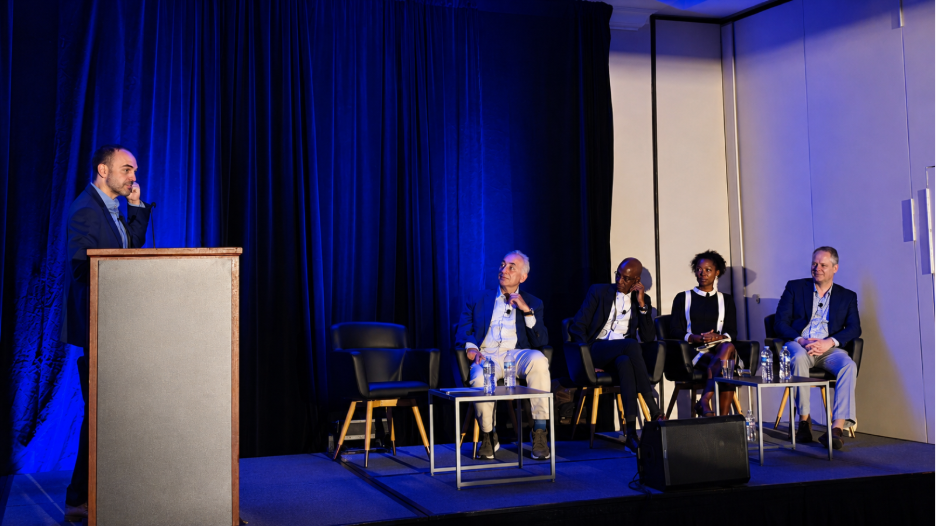
A veteran real estate economist argued that this downturn is unlike anything the US commercial real estate market has seen since the 1980s. In past downturns, the real estate cycle, the familiar swing from boom to bust, was slow and predictable. It was driven by over-building that gradually eroded income until a shock arrived, and investors could time it with rules of thumb like the property clock.
This time is different. It is driven by sharp swings in financial market conditions and by the unwinding of past excess. Because the market carries more information flow and reacts faster, the familiar shortcuts no longer work. As the economist put it, using a property clock to figure out where you are does not work anymore. The market responds to different shocks, and it responds much more quickly.
For an investor, the takeaway is direct. Analysis built on last year's comps can be wrong within weeks, so the edge goes to whoever can re-underwrite quickly against current data. That is the gap Smart Capital Center is built to close, by turning live market data into a real-time read on a deal or a portfolio. This is the through-line that connects the rest of the conference, from distress to AI.
Distress came up throughout the event, and for investors this is where the clearest buying opportunities are right now. The message was that distress looks very different this time. After the global financial crisis, much of it was financial. Buildings still produced cash flow but carried too much debt, so an investor could buy at a discount, wait for credit markets to recover, and refinance at a profit.
That approach works far less often now. An investor who once ran one of the largest office portfolios in the country made the point directly. The distress in office is about the building being obsolete. You cannot put lipstick on it, because the way people work has changed. The asset is truly distressed because it no longer fits demand.
What is obsolescence-driven distress? Obsolescence-driven distress is asset distress caused by a building no longer fitting demand, such as an outdated office tower, rather than by excess leverage. Because the problem is the building itself, it cannot be solved by refinancing alone and usually requires repositioning or conversion.
The opportunity is sizable. According to MSCI Real Assets, about 63 billion dollars of office assets were in distress at the end of the first quarter of 2026, up from 54 billion dollars a year earlier. The market is also starting to transact again, with office sales rising about 39 percent year over year in the first quarter, according to Avison Young, as buyers test where values have bottomed. Distress is not limited to office, either.
Source: MSCI, distressed CRE balance by sector, early 2026
The buyers have changed too. One panelist noted that the people buying distressed assets this cycle are the ones who can swing a hammer. They are private local investors, developers, and owner operators, rather than the financial buyers who dominated the last cycle. Jim Costello, who co-leads the research team at MSCI Real Assets, has described how sponsors and lenders now work out troubled assets together, because the property no longer holds the economic value it did before the pandemic.
That shift puts a premium on underwriting what a tired asset could become, quickly and accurately. Mark Green, chief investment officer of Cottonwood Group, cautioned that opportunistic office buyers should look beyond the discount to prior value or replacement cost, and weigh long-term demand, the odds of a future refinancing, and the capital needed to stabilize the building. For obsolete office in particular, that often means testing whether the asset can be converted to another use. Our guide to office to residential conversion walks through how to tell if a building pencils.
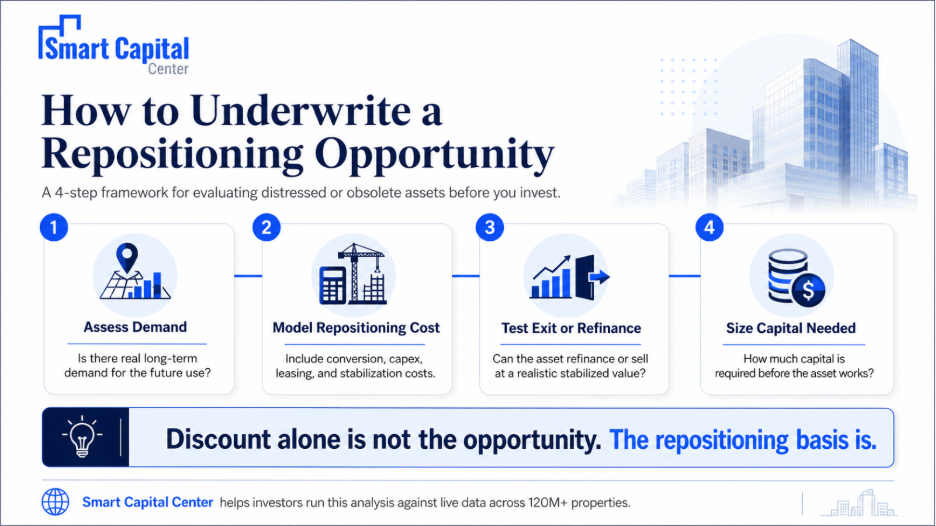
With obsolete assets trading at a discount, the practical question for an investor is whether a repositioning actually pencils. A simple framework keeps the analysis honest.
1. Assess real long-term demand for the space, not just the discount to prior value.
2. Model a repositioning or conversion basis, including the full cost to reposition the asset.
3. Test the odds of a future refinancing or exit at a realistic stabilized value.
4. Size the capital needed to stabilize the building, including several years of leasing costs.
Smart Capital Center runs this analysis against live data across more than 120 million properties, which turns a multi-day review into minutes, so you can move on the right deals before others finish their first pass. For more on this approach, see our guide to value-add real estate and repositioning.
Artificial intelligence was the most active topic of the event, and the tone was practical rather than hyped. A finance-side panelist summed up the consensus. AI is real, and you have to build guardrails around it so it does not hallucinate. He added that the data is not fully showing up yet, so the industry is still in early innings.
The most useful comment came from a portfolio manager describing how her firm is testing AI today. Teams are running a testing exercise to understand whether AI can make the underwriting process more efficient, so the manual data entry piece is eliminated. Another speaker framed the upside in terms of people, saying the goal is to repurpose team members toward their highest and best use.
This is exactly the work Smart Capital Center was built for. Our AI maps a deal into a working model in real time, then stress-tests rents, vacancies, and cap rates against live data across more than 120 million properties, so teams can review far more deals at institutional depth. Because every figure traces back to its source document, the output answers the hallucination concern that the panel raised. JLL has seen a 30x productivity gain doing this with us. For the detail, read our guide to AI underwriting for real estate investors.
For an investor, the payoff is simple. The teams using AI well can look at more deals and still go deep on the ones that matter, which is how you find the good ones first.
"There's this testing exercise that folks are going through to try to understand, can I use it to make the underwriting process more efficient so the data entry piece is eliminated?"
Portfolio manager, IMN Real Estate Private Funds Summer 2026
Beyond the core equity and debt discussion, emerging asset classes drew a large audience, and data centers led that conversation. A dedicated panel examined demand drivers, power availability, and land scarcity, along with the challenge of underwriting long-term infrastructure viability when technology can change quickly. For investors hunting growth outside traditional sectors, data centers are the clearest example of where new capital is flowing, though the long-term underwriting is harder than it looks.
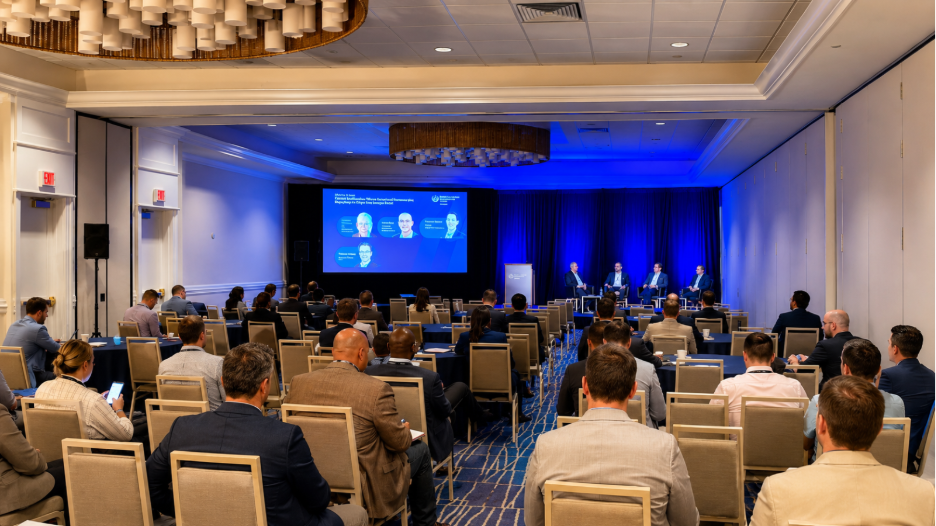
If you put the themes together, a single message emerges for investors. Capital is available, but equity buyers are selective. Distress is real, and it rewards buyers who can reposition rather than simply wait. Across all of it, the market moves faster than the old rules assume.
The common thread is data. Whether you are underwriting a new acquisition, re-underwriting a portfolio as conditions shift, or deciding whether an obsolete building can be repositioned, the advantage goes to teams that can act on current information quickly. Smart Capital Center brings underwriting and portfolio analysis into one place, drawing on more than 1 billion real-time data points and over 500 billion dollars in analyzed CRE transactions. For a closer look at spotting opportunity now, see our guide to distressed commercial real estate in 2026.
IMN's Real Estate Private Funds Summer 2026 confirmed that this market is faster, more selective, and more data-driven than the ones before it. The investors who pull ahead will be the ones who underwrite quickly, re-underwrite their portfolios as conditions change, and move on repositioning opportunities before prices reset further. That is a data problem first, and a strategy problem second.
Analyze deals and portfolios faster with the data behind 120 million properties. Book a Smart Capital Center demo today.
Q: What were the main themes at IMN's Real Estate Private Funds Summer 2026?
A: The event focused on cautious, selective equity buyers even as debt capital stayed available, a market that moves faster than old rules of thumb, distress driven by obsolescence that is opening repositioning opportunities, and AI moving into underwriting. Smart Capital Center attended and tracks these shifts across more than 120 million properties.
Q: Is now a good time to invest in commercial real estate?
A: Panelists described 2026 as a selective buyer's market. Equity investors are cautious, but obsolescence-driven distress is creating repositioning opportunities, and the market is starting to transact again. Smart Capital Center helps investors underwrite more of these opportunities quickly so they can act on the right ones first.
Q: What kind of distress is showing up in the office market?
A: Speakers said office distress this cycle is driven by obsolescence rather than excess debt. MSCI Real Assets reported about 63 billion dollars of office assets in distress at the end of the first quarter of 2026. Many older buildings no longer fit how people work, so the buyers stepping in are focused on repositioning or conversion.
Q: How are investors approaching office obsolescence?
A: Rather than buying on the discount alone, investors are underwriting whether an obsolete building can be repositioned or converted profitably, weighing long-term demand, refinancing odds, and the capital needed to stabilize it. Smart Capital Center models a repositioning basis in real time so investors can test feasibility fast.
Q: How is AI being used in commercial real estate underwriting?
A: At IMN 2026, speakers described using AI to remove manual data entry and to source data through agentic tools, while building guardrails to prevent errors. The near-term goal is efficiency, not full replacement of analysts. Smart Capital Center's AI maps deals into models in real time and traces every figure to its source, which addresses accuracy concerns.
Q: How does Smart Capital Center help CRE investors?
A: Smart Capital Center brings underwriting and portfolio analysis into one AI platform built for commercial real estate. It maps deals into working models in real time, stress-tests them against live data across more than 120 million properties, and re-underwrites a portfolio as conditions change. Investors use it to review more opportunities, underwrite faster, and move on the right deals first.