


CRE Investors

August 12, 2026
CRE Investors
August 12, 2026

In an industry where a single misjudgment can cost millions, commercial real estate investors face a sobering reality: gut instinct and traditional methods are no longer enough. The CRE landscape has fundamentally shifted. Markets move faster, competition intensifies, and information asymmetries that once were a source of advantage now rapidly disappearing.
The winners in this new environment aren't necessarily those with the deepest pockets or longest track records. They're the investors who've mastered commercial real estate data analytics: leveraging vast datasets, real-time market intelligence, and predictive insights to identify opportunities others miss and avoid risks others overlook.
Consider the stakes: access to 120 million+ properties and 1 billion+ real-time data signals can mean the difference between:
Platforms like Smart Capital Center are empowering CRE investors to leverage these capabilities, providing AI-powered tools for real-time data processing, market analysis, and risk detection. It helps investors make faster, more informed decisions, transforming how they analyze properties and manage risk.
The AI market in real estate is expected to grow from roughly $223 billion in 2024 to $312 billion by 2029, underscoring the sector’s rapid adoption of analytics and automation.
This guide explores how data analytics is transforming commercial real estate investment strategies, highlighting key metrics and building a data-driven approach for a competitive advantage. Whether you're managing a billion-dollar fund or building your first portfolio, understanding CRE data analytics is now essential for success.
Commercial real estate data analytics is the systematic collection, processing, and interpretation of quantitative and qualitative data to inform CRE investment decisions. It encompasses everything from property-level financial performance to macro market trends, tenant behavior patterns to alternative data signals that predict future value.
Unlike traditional CRE analysis which relies heavily on historical comparables, broker opinions, and limited datasets, modern commercial real estate analytics harnesses technology to process millions of data points in real-time. This creates a comprehensive, continuously updated view of markets, properties, and opportunities that was simply impossible a decade ago.
The transformation is profound. Where investors once made decisions based on quarterly reports and static appraisals, CRE analytics now enables:

Traditional deal analysis is time-intensive. Reviewing offering memorandums, processing financial statements, and building underwriting models can take days per property. This capacity constraint forces difficult choices: either hire aggressively (diluting returns with overhead) or pass on potentially profitable deals.
Studies show that automated underwriting can raise profits by up to 10.2% and cut default rates by 6.8%. This shows how analytics can improve both efficiency and financial performance.
CRE data analytics transforms this equation. Platforms like Smart Capital Center reduce financial analysis time by 90% through automated document processing and instant data extraction. This lets investors review 10x more opportunities with the same resources. It changes your ability to pick the best deals.
Investment success depends on information quality. The investor who understands market dynamics, tenant trends, and comparable valuations better than competitors will consistently outperform. Commercial real estate analytics provides this advantage by aggregating and analyzing data at a scale humans cannot match.
Modern platforms analyze millions of similar transactions. They track real-time rental rate changes. They monitor tenant credit trends and lease rollover patterns.
They also use alternative data, like foot traffic, social media sentiment, and economic indicators. This comprehensive intelligence enables more accurate valuations, better risk assessment, and identification of market inflection points before they become obvious.
Every investment carries risk. The question is whether you identify and price that risk appropriately. Analytics in commercial real estate excels at uncovering risks that traditional analysis might miss:
With 24/7 AI-powered monitoring, platforms continuously track DSCR trends, occupancy changes, covenant compliance, and market conditions. This enables proactive intervention: refinancing before rate resets become problematic, addressing tenant issues before they vacate, or exiting markets before downturns accelerate.
In competitive markets, small edges compound into substantial outperformance. Moving 50% faster from initial review to offer means winning better deals. Understanding market trends three months before competitors means buying low and selling high.
Building proprietary data insights from every analyzed transaction creates an information moat that strengthens with scale. These advantages last because they are hard to copy without the right systems and a data-driven mindset.
Effective commercial real estate data analytics needs you to know what data matters most.
It also needs you to see how data types work together to give clear insights.
The foundation of CRE analytics is property-level performance data:
• Rent rolls and lease terms: Current rents, lease expirations, escalations, tenant improvement allowances
• Operating financials: NOI, operating expenses, capital expenditures, historical variance analysis
• Tenant information: Credit profiles, industry classifications, space utilization, renewal likelihood
• Physical characteristics: Square footage, building condition, amenities, parking ratios, energy efficiency
Advanced platforms automatically pull this data from documents like rent rolls, T-12 financials, and offering memorandums. They process the information in 1-3 minutes, instead of 30-40 minutes of manual work.
Understanding how properties perform relative to markets is essential. CRE analytics platforms gather similar sales deals, lease comps with rent trends, vacancy and absorption data, and new supply.
They also include demographic and employment data.
This context enables accurate valuations, identification of outperforming or underperforming assets, and prediction of market trajectory before inflection points.
With access to over 120 million properties, investors have plenty of options. They also get strong market data. Investors can compare any property with real market conditions. They do not need to rely on limited comps from brokers.
The most sophisticated analytics in commercial real estate incorporate alternative data that provides leading indicators of property and market performance:
• Foot traffic patterns: Mobile device data showing retail visitation trends
• Social media sentiment: Location popularity and brand perception indicators
• Public transit quality: Accessibility scores affecting property desirability
• Satellite imagery: Parking lot occupancy as a proxy for retail performance
• Economic indicators: Interest rates, employment trends, consumer confidence
These data sources provide insights traditional analysis cannot match. They predict retail tenant struggles before financial statements reflect problems, or identify emerging neighborhoods before prices reflect their potential.
For investors who own many properties, portfolio-level CRE data analytics tracks how the whole portfolio performs. It measures key metrics like IRR, NOI, and cash-on-cash returns.
It tracks concentration risk by geography, tenant, or property type. It also tracks correlations between assets that affect diversification benefits. It helps ensure compliance with fund mandates or covenant requirements.
Real-time dashboards enable continuous monitoring rather than quarterly snapshots, fundamentally changing how investors manage and optimize portfolios.
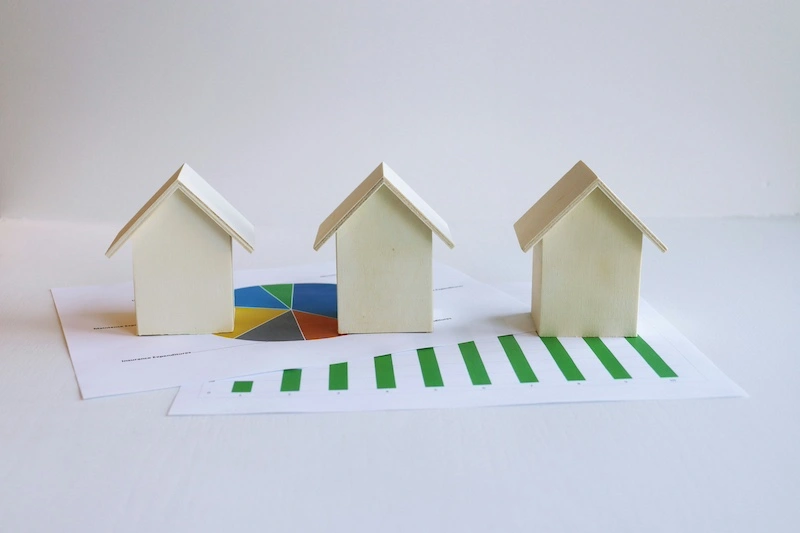
Data without context is noise. Successful commercial real estate analytics needs the right metrics.
It also needs a clear view of what they show about performance and risk.
Core financial metrics every investor should monitor:
• Net Operating Income (NOI): Property income after operating expenses, the foundation for valuation
• Internal Rate of Return (IRR): Time-weighted return accounting for investment timing and exit
• Cash-on-Cash Return: Annual pre-tax cash flow divided by total cash invested
• Capitalization Rate: NOI divided by property value, enabling comparable analysis
• Occupancy and Lease Rollover: Current occupancy rates and upcoming lease expirations affecting stability
Advanced platforms calculate these metrics automatically and track trends over time, alerting investors to performance changes requiring attention.
Understanding risk is as important as measuring returns. Key risk metrics include
AI-powered platforms monitor these metrics and send alerts when thresholds are crossed. They also flag concerning trends, enabling proactive risk management instead of reactive crisis response.
Successfully implementing data analytics in commercial real estate requires more than purchasing software. It demands strategic planning, organizational alignment, and commitment to data-driven decision-making.
The true value of commercial real estate analytics becomes clear through practical applications that deliver measurable results.
Investment firms using CRE data analytics can screen hundreds of opportunities weekly instead of dozens monthly. Automated document processing extracts key data from offering memorandums instantly. AI-powered platforms compare each property against millions of comparables, identify value-add opportunities, and flag potential risks. All within minutes.
This capacity advantage means seeing more deals, moving faster on the best opportunities, and making offers before competitors even complete their preliminary analysis. Organizations like JLL report 30x productivity gains in financial analysis, fundamentally changing their acquisition capacity.
Rather than quarterly performance reviews, analytics enables continuous monitoring of every property. Track NOI trends, identify underperforming assets requiring operational improvements, spot outperformers worth replicating strategies, and monitor lease rollover schedules to proactively address renewals. Real-time dashboards provide portfolio-wide visibility, revealing concentration risks, correlation patterns, and optimization opportunities that static reports cannot capture.
Knowing when to sell is as important as knowing what to buy. CRE analytics platforms track real-time market conditions, comparable sale prices, cap rate trends, and buyer appetite.
By monitoring these signals continuously, investors can identify optimal exit windows. This lets you sell in strong markets before they change, or hold through short-term weakness when long-term basics stay solid. This market timing advantage translates directly to superior IRRs.
Even sophisticated investors stumble when implementing commercial real estate data analytics. Understanding these common mistakes helps you extract maximum value while avoiding costly missteps.
Access to billions of data points means nothing if you can't translate them into decisions. Many investors like detailed dashboards, but they struggle to find the metrics that matter for their investment thesis. The solution: Focus on 5–7 core KPIs that match your strategy. Add more data as needed for specific decisions.
Inaccurate or outdated data leads to flawed conclusions that can cost millions. A database with 100 million properties is worthless if half the information is stale.
Prioritize platforms like Smart Capital Center that check data from multiple sources. They also provide real-time updates. They do not rely on static datasets.
Technology amplifies judgment but doesn't replace it. The worst outcomes occur when investors blindly follow model outputs without applying market knowledge and experience. The best results come from combining AI's analytical power with human expertise. Let the platform process data while you interpret context and make strategic calls.
Some investors endlessly refine models instead of making decisions. Perfect data doesn't exist, and waiting for it means losing deals to faster competitors. Set clear decision frameworks and time limits. If you have 80% confidence based on available data, move forward rather than seeking 95% certainty.
Fragmented systems – one tool for property analysis, another for market research, a third for portfolio monitoring – create inefficiencies and data inconsistencies. Choose integrated platforms that consolidate property data, market intelligence, and portfolio monitoring in one ecosystem. This eliminates duplicate entries, ensures consistency, and accelerates decision-making.
Avoiding these pitfalls transforms analytics from an expensive distraction into a genuine competitive advantage.
We're in the early stages of analytics transformation in commercial real estate. Several emerging trends will reshape how investors operate in the coming years.
Predictive Analytics:
Real-Time Valuation:
Natural Language Interfaces:
Commercial real estate data analytics is no longer optional for serious investors. The competitive landscape has fundamentally shifted. Firms that win the best deals today, improve portfolio performance, and deliver strong risk-adjusted returns share one trait. They use data-driven decision-making.
The transformation doesn't require abandoning investment expertise or market knowledge. Rather, analytics in commercial real estate amplifies human judgment with machine intelligence: processing vast datasets, identifying patterns, and surfacing insights that inform better decisions. Your experience and intuition become more valuable, not less, when supported by comprehensive data.
CRE investors who move decisively will evaluate more opportunities, make better decisions, manage risk more effectively, and build portfolios that consistently outperform. Those who wait will struggle more to compete. Others use 120 million+ properties, 1 billion+ data signals, and 24/7 AI insights.
What is commercial real estate data analytics?
Commercial real estate data analytics is the systematic collection and interpretation of property, market, and alternative data to inform CRE investment decisions. It combines financial metrics, market trends, and predictive insights to enable data-driven strategies that outperform traditional approaches.
How does CRE analytics improve investment returns?
CRE analytics helps investors review more deals. It helps them set accurate prices. It helps them spot value-add opportunities.
It helps them track portfolios over time. It helps them plan exits well. These advantages compound into sustainable outperformance.
What are the most important metrics in commercial real estate analytics?
Critical metrics include NOI, IRR, cash-on-cash returns, and cap rates. They also include occupancy rates, lease rollover schedules, DSCR, and LTV ratios. The most important metrics depend on your investment strategy, property type, and risk tolerance.
What types of alternative data are useful in CRE analytics?
Valuable sources include foot traffic patterns, social media sentiment, satellite imagery of parking lots, transit accessibility scores, employment trends, and consumer spending patterns. These provide leading indicators before traditional metrics reflect changes.
How does Smart Capital Center improve CRE data analytics?
Smart Capital Center uses AI to automate data extraction. It delivers real-time market intelligence. It creates detailed financial models for faster decisions. The platform helps investors evaluate more opportunities, identify risks, and optimize portfolios with precision and speed.
How does Smart Capital Center enhance decision-making for CRE investors?
By using AI and machine learning, Smart Capital Center delivers real-time insights, predictive analytics, and market forecasts. This helps investors make data-driven decisions fast. It also lowers the risk of missed opportunities or overpaying.
What sets Smart Capital Center apart from other CRE analytics platforms?
Smart Capital Center offers a complete, end-to-end solution for CRE investors.
It includes automated document processing, real-time portfolio monitoring, and custom analytics dashboards.
It also provides enterprise-grade security.
The most successful investors in commercial real estate share a common advantage: access to comprehensive, real-time market intelligence. Smart Capital Center delivers the analytics infrastructure that institutional leaders rely on to outperform their markets.
What you gain:
Your competition is already using data analytics to gain an edge. The question is: how long can you afford to wait?
Discover what's possible. Schedule a personalized demonstration and see how Smart Capital Center transforms raw data into actionable investment intelligence. Book your demo now and join the investors who are redefining what's possible in CRE.