


AI in Commercial Real Estate

July 30, 2026
AI in Commercial Real Estate
July 30, 2026

According to Moody's 2026 private credit outlook, U.S. private credit assets under management have surpassed $2 trillion and are tracking toward $4 trillion by 2030, while the MBA reports $875 billion in U.S. commercial mortgages will mature in 2026 alone — 17% of the $5 trillion outstanding (Moody's via HedgeCo, May 2026; MBA, March 2026). The 2026 commercial real estate market has transitioned from a period of broad uncertainty to one of high-stakes selectivity — often described as the "Great Reset" nearing its conclusion.
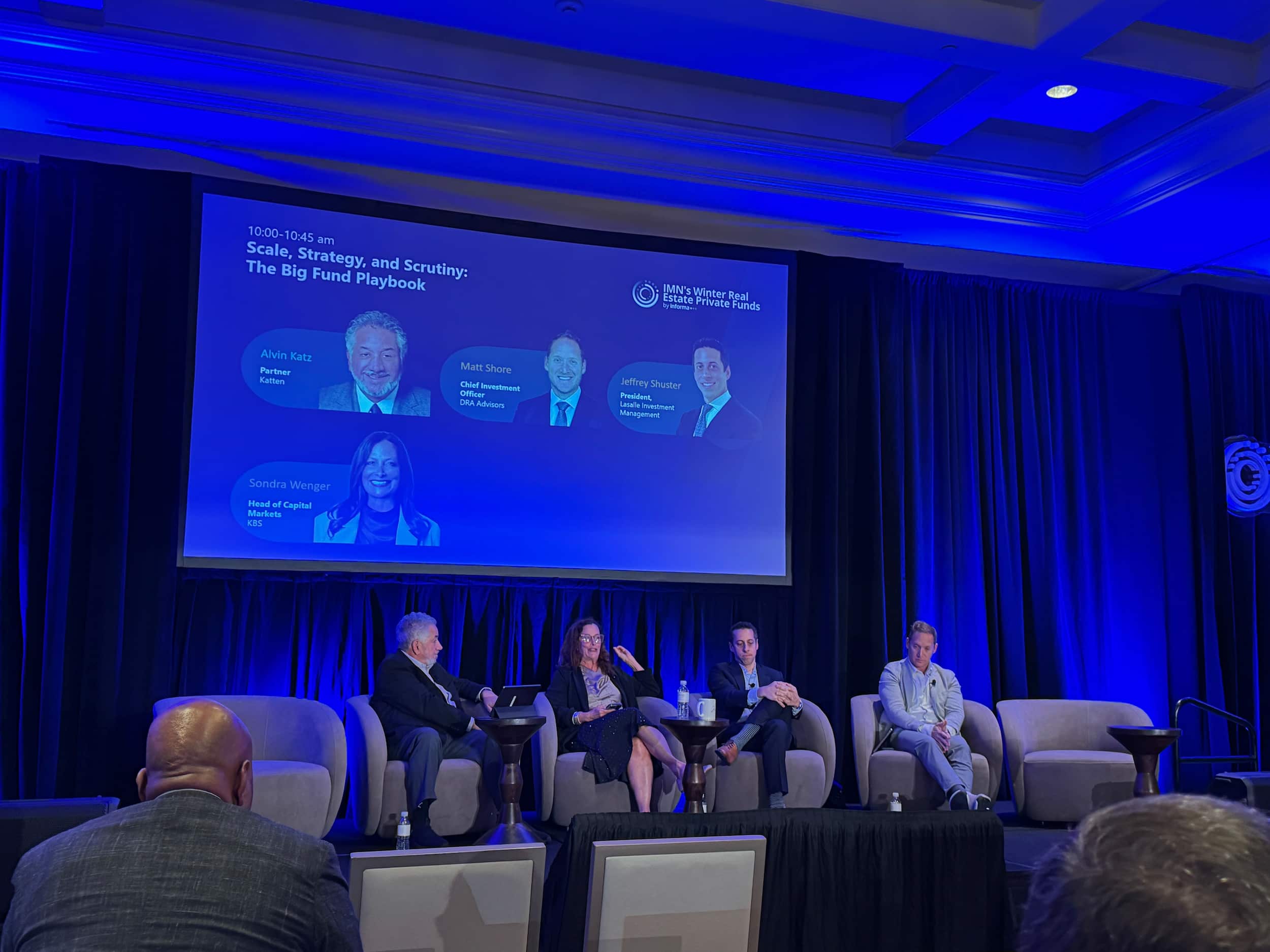
Industry leaders at the IMN Winter Forum, including Devan Popat of Katten and Spencer Schlee of Canyon Partners, emphasized that the "Great Hesitation" has officially thawed, replaced by a "K-shaped" recovery where asset quality and precision underwriting dictate the divide between winners and losers. As the market polarizes, a definitive gap has emerged between firms capable of targeted, high-fidelity execution and those still tethered to slow, legacy processes.
This report outlines the strategies — rooted in asset-level quality, structural seniority, and regulatory navigation — that are defining the current cycle's demand for identifying the 'haves' of the market. The Smart Capital Center team was on the ground at IMN, in high-stakes consultations with institutional investment firms across the spectrum. Throughout the forum, Smart Capital Center's end-to-end platform — powered by AI-driven underwriting, automated investment memo generation, and autonomous asset management agents, with 1B+ real-time data points across 120M+ properties and $500B+ analyzed transactions — was recognized as a critical framework for navigating the next market cycle.
During the opening panels, a recurring theme emerged: the traditional Common Equity model is being sidelined in favor of more protective, yield-enhanced structures. The shift is not stylistic — it is structural, driven by where senior LTVs have settled and where private credit has scaled.
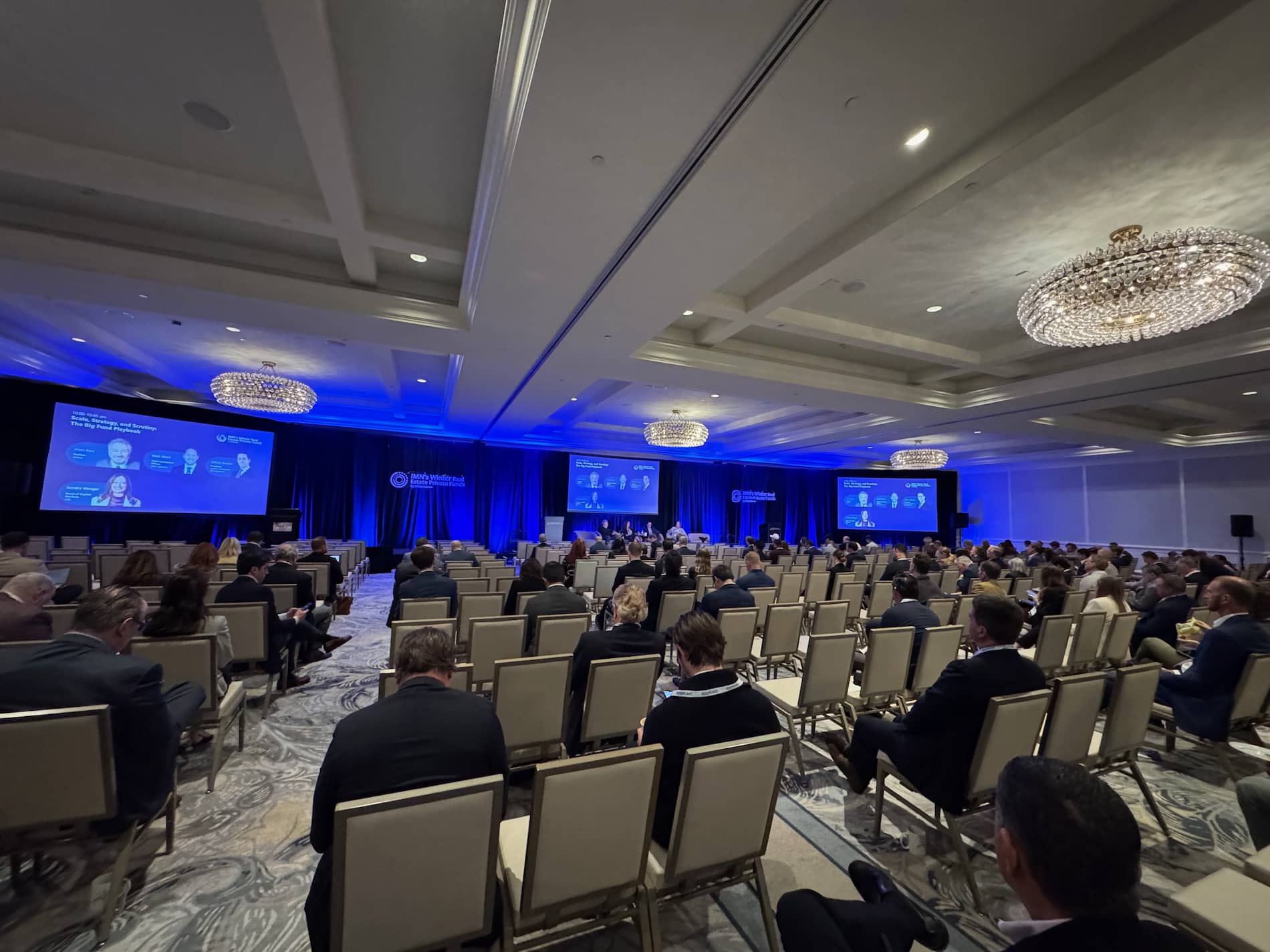
The 2026 market has produced a distinctive unleveraged play. By operating outside traditional debt constraints, institutional firms are targeting unique, mispriced assets where leveraged competition is absent in the "higher-for-longer" 10-year Treasury environment. Long-term yields remain near 4% per CBRE's U.S. Real Estate Market Outlook 2026, well above the 2018-2021 baseline.
• High-Precision Acquisitions: These are not thematic "macro" plays — they are surgical acquisitions of assets with distressed capital stacks rather than distressed real estate. Per Blue Owl's 2026 outlook, commercial property values are down ~20% from early 2022, allowing lenders to extend credit at 60-65% LTVs versus 70%+ in past cycles.
• The Data Fidelity Edge: Identifying value in this cycle requires AI to analyze property-specific utility — from ESG-compliant infrastructure to AI-ready power capacity. Firms using high-fidelity data tools can identify alpha — the extra return from superior knowledge — within a property's core fundamentals that the average broker overlooks. Per Wellington's 2026 outlook, the addressable private credit market now exceeds $30 trillion across asset classes, much of it in undercovered niches.
As traditional banks maintain a restrictive, risk-averse posture due to ongoing balance sheet constraints — including Basel III Endgame capital requirements and FDIC CRE concentration guidance — Private Credit has officially moved from the periphery to the center of CRE capital markets. According to Cleary Gottlieb's 2026 Private Credit Outlook, direct lending now matches the broadly syndicated loan market at $1.5–2 trillion in size and is forecast to reach $3 trillion by 2028. Mordor Intelligence puts the 2026 figure at $1.96 trillion.
Investors are increasingly crowding into Preferred Equity and Mezzanine positions, a strategy that has matured into a structural requirement for 2026 deal-making. Per Blue Owl, more than $3 trillion in commercial real estate debt is set to mature by 2030, and direct lending public-market default rates remain at ~1.25% versus a historical average of ~2.5% — supporting the resilience case for the asset class.
• The "Safety Buffer" in a K-Shaped Market: This middle-stack strategy allows firms to capture high-teen returns while maintaining a significant cushion of common equity. In an era of continued valuation dispersion, these structured positions provide essential downside protection — they are first to be shielded if property-specific volatility strikes, effectively inverting the traditional risk-return hierarchy in favor of debt.
• Construction & Residential For-Sale: This shift is most visible in for-sale residential projects. Preferred equity provides the critical "gap" funding required as senior lenders lower LTV thresholds to manage risk-weighted assets. These positions are often fortified by completion guarantees and hard deposits, offering a de-risked entry point into a sector anchored by persistent housing demand and slowing development pipelines.
PRACTICAL TAKEAWAY
In 2026, the cap-stack-as-strategy decision is itself the alpha. Run senior, mezzanine, preferred equity, and JV scenarios in parallel — not sequentially — when pricing any deal.
In the 2026 landscape, the "Beta" of broad market growth has evaporated, replaced by engineered value. Profits are now found at the intersection of regulatory navigation and high-precision execution. As the "Great Hesitation" thaws, capital is flowing toward assets protected by moats of scarcity — either government-mandated or geographically driven.
A defining theme of the IMN Forum was the structural shift caused by California's Assembly Bill 98 (AB 98), signed by Governor Newsom on September 29, 2024, which took full effect on January 1, 2026. The law has transformed the Inland Empire from a wide-open development hub into a highly regulated "Legislative Moat" for industrial real estate.
• The Supply Vacuum: AB 98 mandates stringent new standards for logistics facilities of 250,000 sq. ft. or more, including 300-foot setbacks for truck loading bays in industrial zones (500 feet in non-industrial zones), 100-foot landscape buffers, and dedicated heavy-duty truck entrances (Holland & Knight, 2024; Buchalter, December 2025). For developers with grandfathered pipelines, these hurdles act as an insurmountable barrier to entry for new competition.
• Long-Term Pricing Power: By effectively halting the entitlement of large-scale "commodity" warehouses, the state has created an artificial supply cap. The "Warehouse Concentration Region" defined by AB 98 covers Riverside and San Bernardino counties plus 12 named cities including Fontana, Ontario, and Rancho Cucamonga. Existing Class A assets in these markets are positioned for sustained rent growth and valuation stability throughout the decade as replacement costs climb under "21st Century Warehouse" requirements (Latham & Watkins, 2024).
• Ongoing Implementation: Senate Bill 415, passed in October 2025, refined AB 98's implementation — clarifying cross-dock orientation rules and infill applicability — but did not undo the law's core supply restrictions (AIR CRE, November 2025). The South Coast AQMD will deploy mobile air monitoring across Riverside and San Bernardino through 2032, with findings due to the Legislature by 2033.
While the Sun Belt dominated the last decade, 2026 capital has pivoted toward the Institutional Midwest — specifically Indianapolis, Columbus, and Kansas City — where affordability and supply discipline offer superior risk-adjusted returns.
NOI Erosion & The Margin Squeeze: The primary threat to 2026 multifamily performance has shifted from vacancy risk to a persistent margin squeeze. Insurance premiums and property taxes have emerged as the primary detractors of Net Operating Income (NOI). According to Marsh's 2025 Insurance Market Report, commercial property premiums rose 8% to 25% in catastrophe-exposed regions through 2025.
Smart Capital Center's nationwide analysis of property financial performance corroborates the bifurcation: coastal and Florida markets face heavy compression, while the Midwest remains significantly more manageable. The data aligns with CRE Daily's Spring 2026 Multifamily Opportunity Matrix, which ranks Indianapolis as the top multifamily investment market for 2026, with Milwaukee, Chicago, Cincinnati, and Columbus also in the top tier.
The Talent Shortage & "Pricing by the Day": The wave of Class A supply delivered between 2023 and 2025 has exposed a critical management gap. The IMN panel observed that the hospitality-to-CRE pipeline has struggled because the "pricing by the day" mindset of hotels (dynamic yield management) fails to account for the long-term relationship management required for residential stability.
Institutional Shift: With cap rates in the Midwest sitting 80–120 basis points above coastal markets, institutional firms are aggressively targeting these metros for their predictable exit cap scenarios and the absence of the supply shock currently depressing rents in Austin and Phoenix.
"There is absolutely a tale of two office buildings. I have been saying this since post-COVID: there are the 'haves' and the 'have-nots.' If you are in the right location with the right amenities, you can push rates and vacancies are low. It is an extreme difference."— Sondra Wenger, Head of Capital Markets, KBS
In the current environment, the primary risk to fund performance is "Alpha Leak" — the loss of opportunity caused by the inability to process hyper-abundant data at the speed of a shifting market. With interest rates and operating variables like insurance premiums moving weekly, a 14-day underwriting cycle is no longer a standard; it is a liability.
Smart Capital Center's Perspective: In 2026, decision velocity is a form of risk mitigation. To meet this need for institutional speed, SCC has established the 48-hour High-Confidence Standard. While legacy firms remain tethered to manual data entry and fragmented analysis, SCC's platform enables a 48-hour D2D (Document-to-Decision) window.
By automating the forensic ingestion of rent rolls and T-12s, SCC empowers firms to lock in pricing on high-yield opportunities and secure unleveraged alpha before the window of opportunity closes. The same infrastructure has produced a 40% reduction in financial model prep time at KeyBank (Ken Schroeder) and a 30x productivity gain on specific underwriting workflows at JLL (Fernando Salazar).
A masterclass in creative diligence was presented through a $50 million Hawaii land acquisition. Upon acquisition, the firm discovered a terminal defect: thousands of acres of farmland lacked legal access, entirely landlocked by military and state-owned property. While legacy firms would have viewed this as a failure, the team treated the access deficit as a mispricing opportunity solvable through local partnership and surgical negotiation.
· The Strategy: Leveraging a local network, the firm negotiated a partnership with an adjacent landowner to secure permanent, deeded access.
· The Monetization: Once access was formalized, they successfully renegotiated the purchase price with the original seller and simultaneously secured an exit for a portion of the land to a solar developer for $45 million.
· The Result: The firm recovered nearly 90% of their basis while retaining most of the land for future development.
The 2026 Lesson: In a high-rate, transparent market, "easy" deals are gone. Real alpha is now found within diligence gaps and site-specific complexities that legacy firms often overlook. Smart Capital Center bridges this gap by providing an AI- platform that acts as a forensic engine for investors and lenders. Our platform extracts and unifies data from fragmented documents, spreadsheets, and databases into a single source of truth. By automatically cross-checking and reconciling these data points against our proprietary database, we identify hidden risks and financial anomalies.
The "elephant in the room" was the persistent valuation gap. Owners who acquired assets at 3.5% cap rates are currently in a standoff with a reality that mandates 6–7% caps. Per CBRE's 2026 Outlook, cap rates for most property types are expected to compress 5 to 15 basis points in 2026, with the strongest compression in good-quality assets — but the underlying repricing has been substantial. Blue Owl reports commercial property values are down approximately 20% from early 2022.
The increase in the risk-free rate has reset the floor for CRE returns. Investors are no longer just comparing real estate to other real estate; they are weighing a 6-cap building against a 5% risk-free Treasury bond. In 2026, real estate must justify its risk premium through operational excellence, not just inflation. Per Blue Owl's analysis, current credit spreads, SOFR yields, and origination fees imply that a new commercial real estate loan can mathematically generate a total return of 8% or more — versus approximately 4% in 2022.
2026 is the year of Rescue Capital. A massive wave of floating-rate debt is hitting maturity, and many properties that are operationally sound simply have "broken" balance sheets. Per S&P Global Market Intelligence, the CRE maturity wall peaks at $1.26 trillion in 2027. Firms providing bridge loans or preferred equity to gap the difference during a refinance are capturing some of the highest risk-adjusted returns in decades.
PRACTICAL TAKEAWAY
Bridge and preferred equity strategies should be priced explicitly against the 2026-2027 maturity calendar — not against an idealized exit. Match capital duration to the borrower's path back to permanent financing, and price the difference as your premium.
Commercial Real Estate in 2026 is no longer a game of "buying the market"—it is a game of individual asset execution. Success requires a pivot to a tech-first, structure-heavy approach that prioritizes:
1. Decision Velocity: Closing the "Document-to-Decision" window before the competition even finishes their intake.
2. Legislative Moats: Targeting markets where supply is artificially capped by regulatory barriers like AB 98.
3. Structured Alpha: Moving into the "Middle of the Stack" to protect the downside while capturing high-teen yields.
AB 98 is California's Assembly Bill 98, signed September 29, 2024, effective January 1, 2026, which sets statewide design standards for new and expanded logistics facilities. For warehouses 250,000 sq. ft. or larger, it requires 300-foot truck-bay setbacks in industrial zones (500 feet in non-industrial), 50-100 feet of landscape buffering, separate heavy-duty truck entrances, and 21st Century Warehouse design standards. By restricting where and how new warehouses can be built — particularly in the Inland Empire's "Warehouse Concentration Region" — AB 98 functions as a supply cap that increases pricing power on existing Class A assets.
Approximately $1.96 trillion per Mordor Intelligence (March 2026), with Moody's projecting growth to roughly $2 trillion by year-end 2026 and toward $4 trillion by 2030. Direct lending alone now matches the broadly syndicated loan market at $1.5–2 trillion per Cleary Gottlieb's 2026 Outlook. Wellington estimates the addressable market across all private credit asset classes exceeds $30 trillion globally.
Two reasons. First, senior LTVs have tightened from 70%+ to 60-65% as banks pulled back under Basel III Endgame and FDIC concentration guidance — leaving a structural gap that preferred equity and mezzanine fill. Second, the K-shaped recovery means common equity is exposed to property-level volatility while structured positions are protected by both senior debt seniority and an equity cushion. Direct lending public-market default rates remain at ~1.25%, well below the historical 2.5% average per Blue Owl.
Indianapolis, Kansas City, Columbus, and Detroit lead the institutional Midwest. Per Yardi Matrix, Indianapolis posted 7.7% year-over-year rent growth in March 2026 and Kansas City 6.4%, against a 3.2% national rate. The NAA 2026 Apartment Housing Outlook forecasts 3-4.5% Midwest rent growth versus 1-2% in the Sun Belt. Cap rates run 80-120 basis points above coastal markets.
$875 billion in U.S. commercial mortgages mature in 2026 (17% of the $5 trillion outstanding), with the wall peaking at $1.26 trillion in 2027 according to S&P Global Market Intelligence. Through 2030, more than $3 trillion in CRE debt is set to mature per Blue Owl. The largest 2026 concentrations sit with depository banks ($396B), CMBS ($200B), and credit companies ($163B).
The 48-hour D2D window is Smart Capital Center's institutional standard for the time between document intake (rent rolls, T-12s, leases, capital stack memos) and a high-confidence underwriting decision. It replaces the legacy 14-day cycle that institutional firms historically tolerated. The compression comes from automated forensic data ingestion, AI-driven anomaly detection across 1B+ data points, and integrated capital-stack modeling — producing the same outputs as a manual workflow but in roughly 1/7 the time.
AI is compressing the underwriting cycle from days to hours by automating data ingestion, comp-set construction, sensitivity analysis, and covenant tracking. Smart Capital Center analyzes 1B+ real-time data points across 120M+ properties and has supported $500B+ in transactions for clients including KeyBank, JLL, The RMR Group, Aareal Bank, and the Community Preservation Corporation. Reported client outcomes include 40% reductions in financial model prep time (KeyBank) and 30x productivity gains on specific workflows (JLL).
Alpha Leak is the loss of investment opportunity caused by the inability to process market data and document workflows at the speed of price discovery. In 2026, with insurance premiums and rate spreads moving weekly, a slow underwriting cycle is itself a form of risk. Firms prevent Alpha Leak by automating document intake, integrating live market data into the underwriting model, and shortening the Document-to-Decision window — typically through agentic AI infrastructure rather than additional headcount.
At Smart Capital Center, we don't just observe the Document-to-Decision window — we help you own it. Our Agentic AI infrastructure is engineered to provide the local-expert insight of a senior CRE professional with the processing scale of an institutional data platform.
Stop letting legacy workflows leak your alpha. Schedule a meeting with our team today to see how we can compress your underwriting cycle and accelerate your 2026 deal flow.
• Massive Data Synthesis: Our Agentic AI surfaces critical patterns and market signals — such as hyper-local zoning shifts and real-time energy costs — that remain invisible to human analysts, by processing millions of data points simultaneously across 120M+ properties.
• Forensic Risk Detection: By analyzing a significantly broader data set, the platform identifies hidden OpEx liabilities and localized insurance spikes before they hit a T-12 — protecting your downside.
• 48-Hour Execution Confidence: We collapse the Document-to-Decision (D2D) window by automating the ingestion of fragmented rent rolls and complex legal docs, issuing high-confidence LOIs while competitors are still in the intake phase.
• Reduction in Human Error: Speed is backed by precision. Our AI-driven underwriting reduces manual errors by 30%, providing the quantitative certainty required to execute distressed capital stack deals with conviction.
• Operational Alpha at Scale: This intelligence moat allows lean teams to maintain the top-of-funnel visibility of a global institution — securing resilient assets in a K-shaped recovery with strong velocity.
In the race for 2026's best deals, the window is closing fast. Don't let your process be the bottleneck.
Compress underwriting from 14 days to 48 hours. 1B+ live data points behind every decision. 360° real-time risk and market analysis.
→ Schedule your demo with Smart Capital Center